

Starting a SIP (Systematic Investment Plan) in mutual funds is one of the simplest ways to build wealth over time. A systematic investment plan (SIP) allows you to invest a fixed amount at regular intervals in a mutual fund scheme, promoting disciplined investing. SIPs can be started with a minimum amount, sometimes as low as ₹100, making them accessible to most investors. Whether you’re just stepping into the world of investments or looking to grow your existing portfolio, the process is seamless, especially when done online through platforms like CubePlus.
How to start a Mutual Fund SIP online on CubePlus
Whether you are investing in equity, debt, liquid, or hybrid funds, the flow remains simple and investor-friendly.
Pick a Mutual Fund
Open the Mutual Funds section on CubePlus. Use filters like risk level, category (tax-saving, large-cap, debt, Flexi Cap, etc.), or investment goals to shortlist a fund that suits you. You can choose from equity mutual funds, debt funds, or balanced funds.
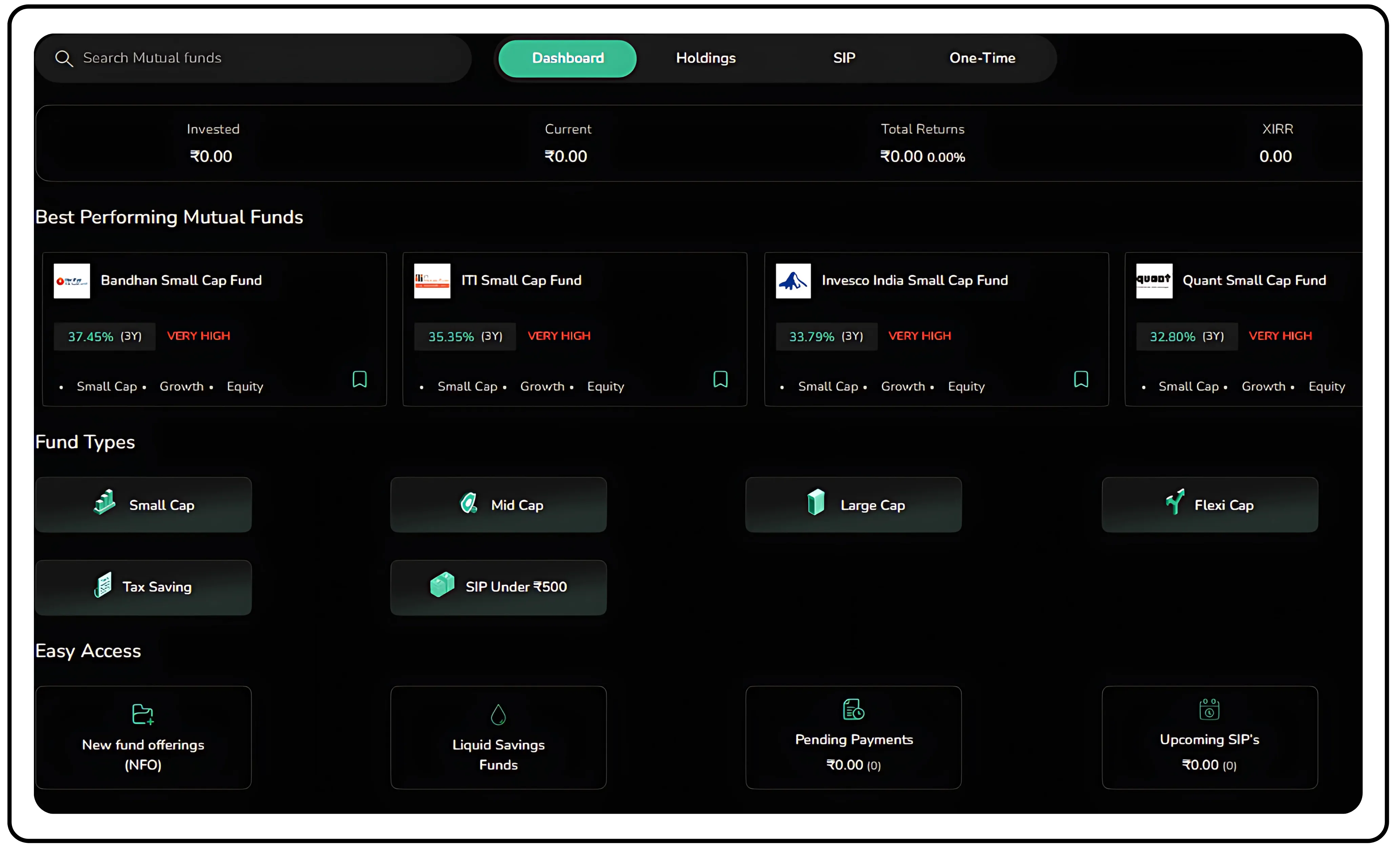
Investing in mutual funds through SIPs helps you build a diversified portfolio across various asset classes. When making investment decisions, consider your investment horizon, risk tolerance, and financial goals.
Choose your investment type
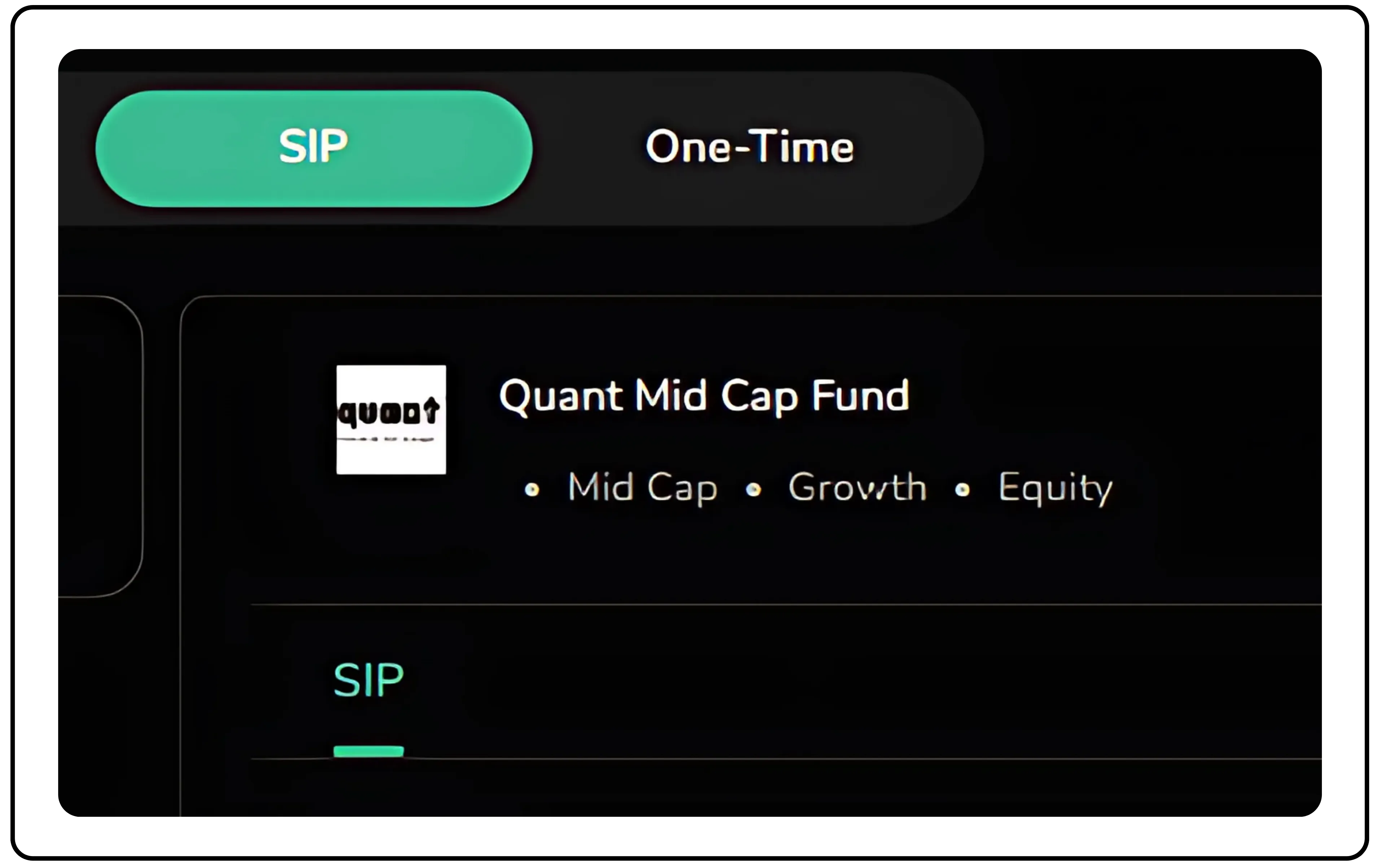
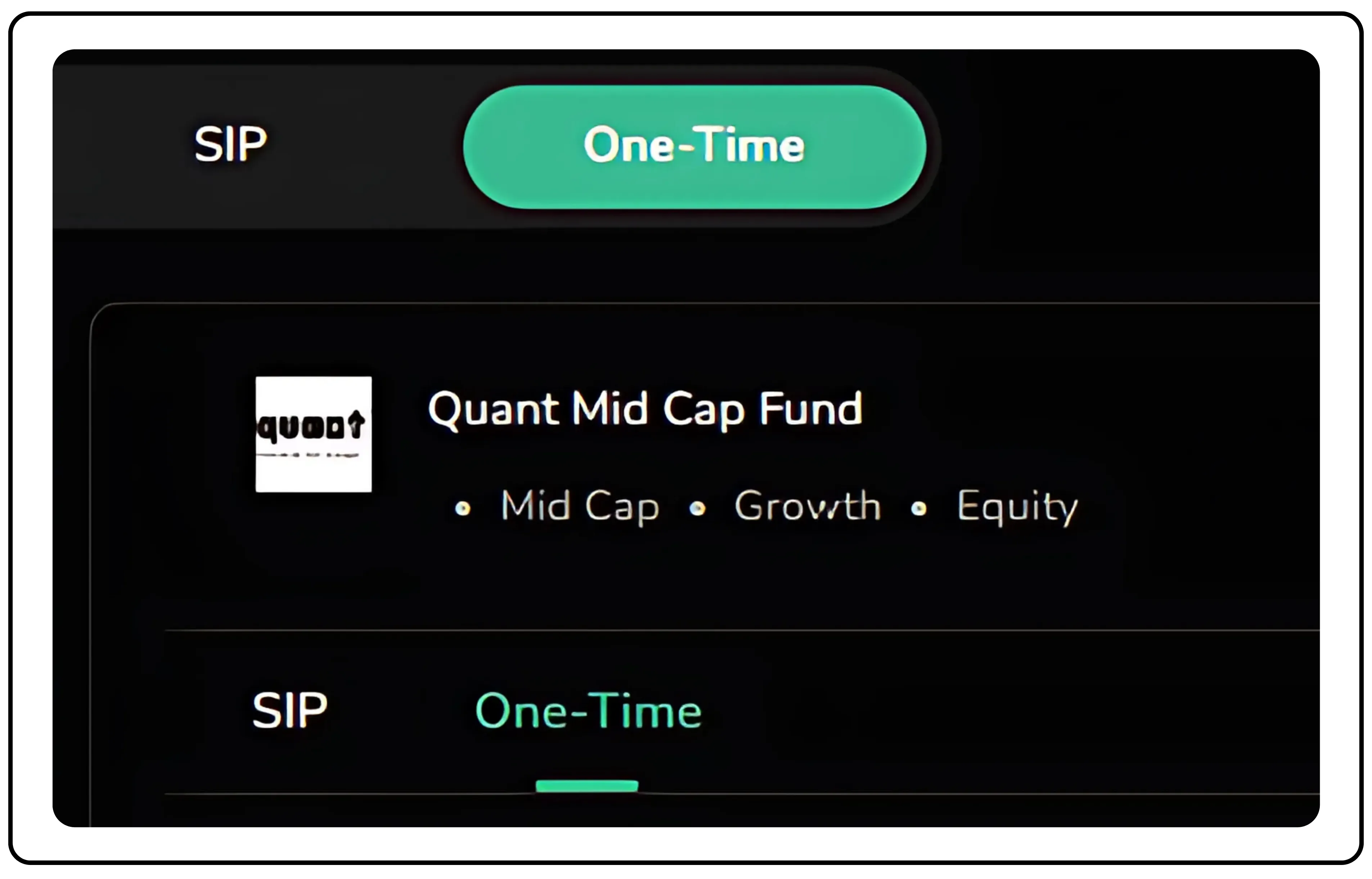
Decide between a SIP (Systematic Investment Plan) or a one-time lump sum investment. A monthly SIP is the most common option, allowing you to invest a fixed SIP amount at predefined SIP intervals such as monthly, weekly, or quarterly. There’s no pressure, you can start with either and switch later.
Enter the amount
Set your investment amount based on your financial goals and risk tolerance. There is no maximum investment limit for SIPs, so you can start small or go big pick what suits your budget and long-term wealth creation objectives.

Set the SIP start date
Select a date for your SIP to begin. The SIP installment will be automatically debited from your bank account at the chosen interval.
Also read: What Is a Mutual Fund?
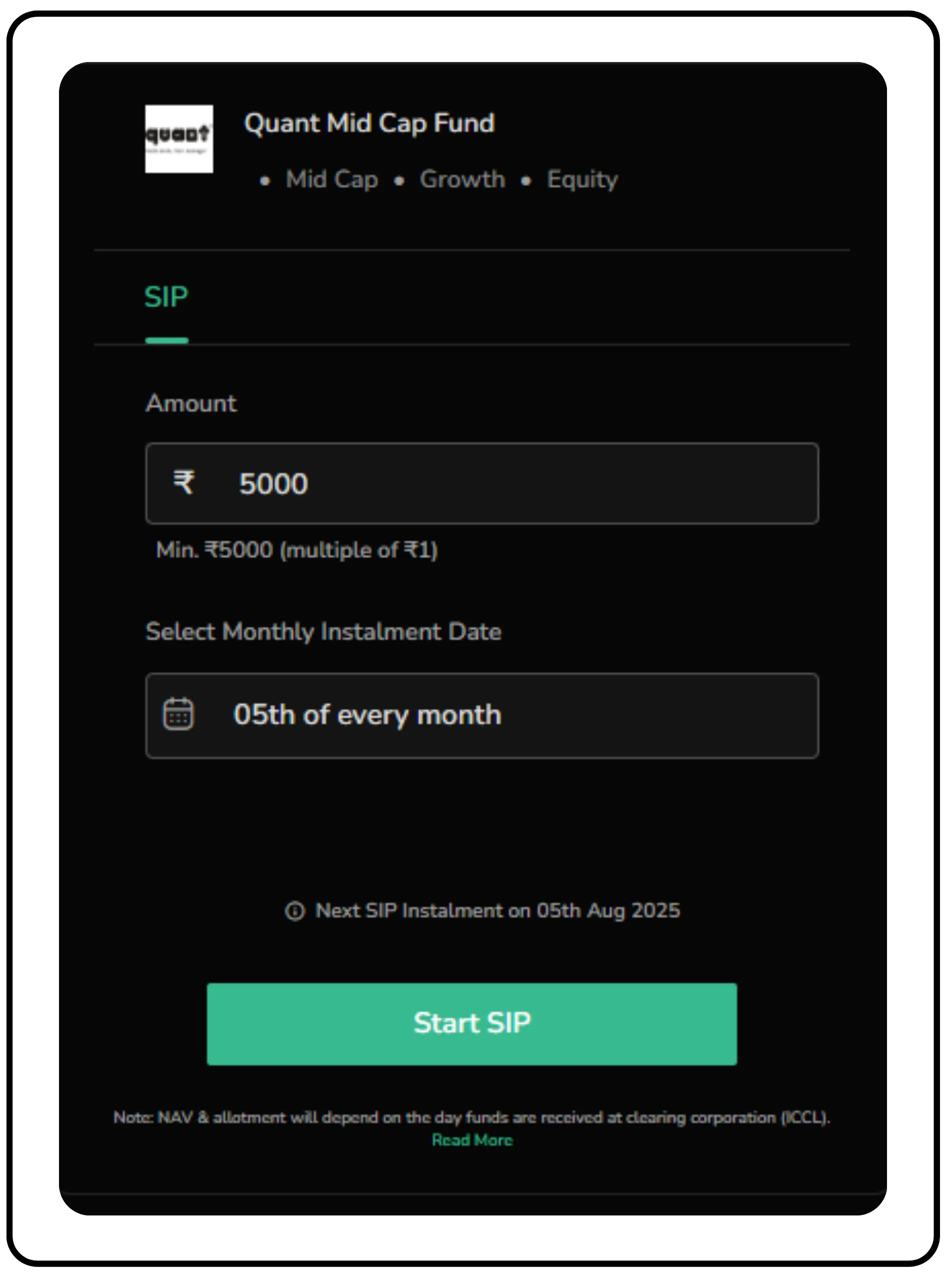
Click ‘Start SIP’
Congratulations.
Your order is placed. Once payment is completed via UPI or net banking, your mutual fund units will be allotted within T+1 or T+2 working days.
You can track your investments anytime under the ‘Holdings’ tab on CubePlus.

Features like step-up SIP and top-up SIP allow you to increase your SIP amount over time, helping you grow your investments as your income rises.
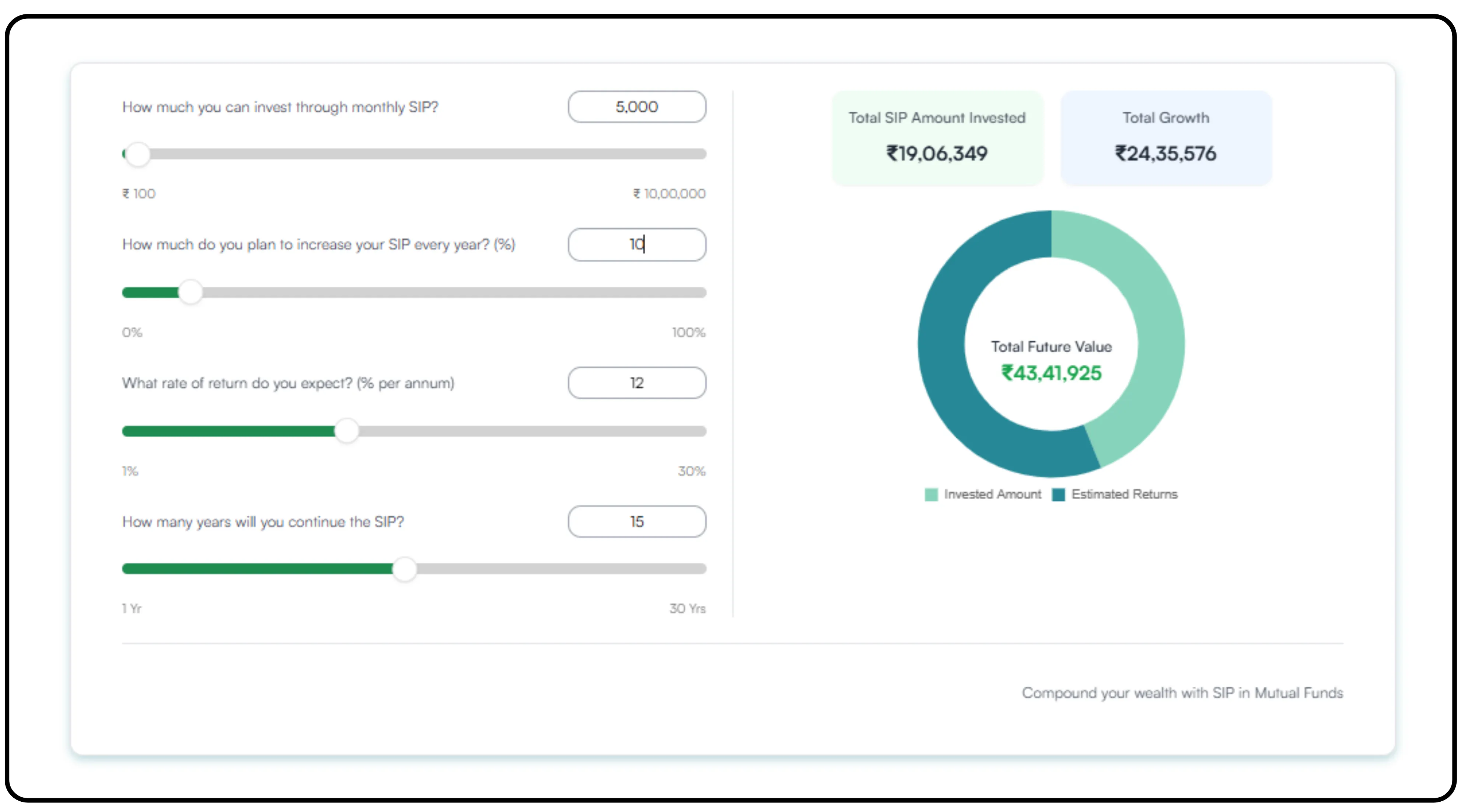
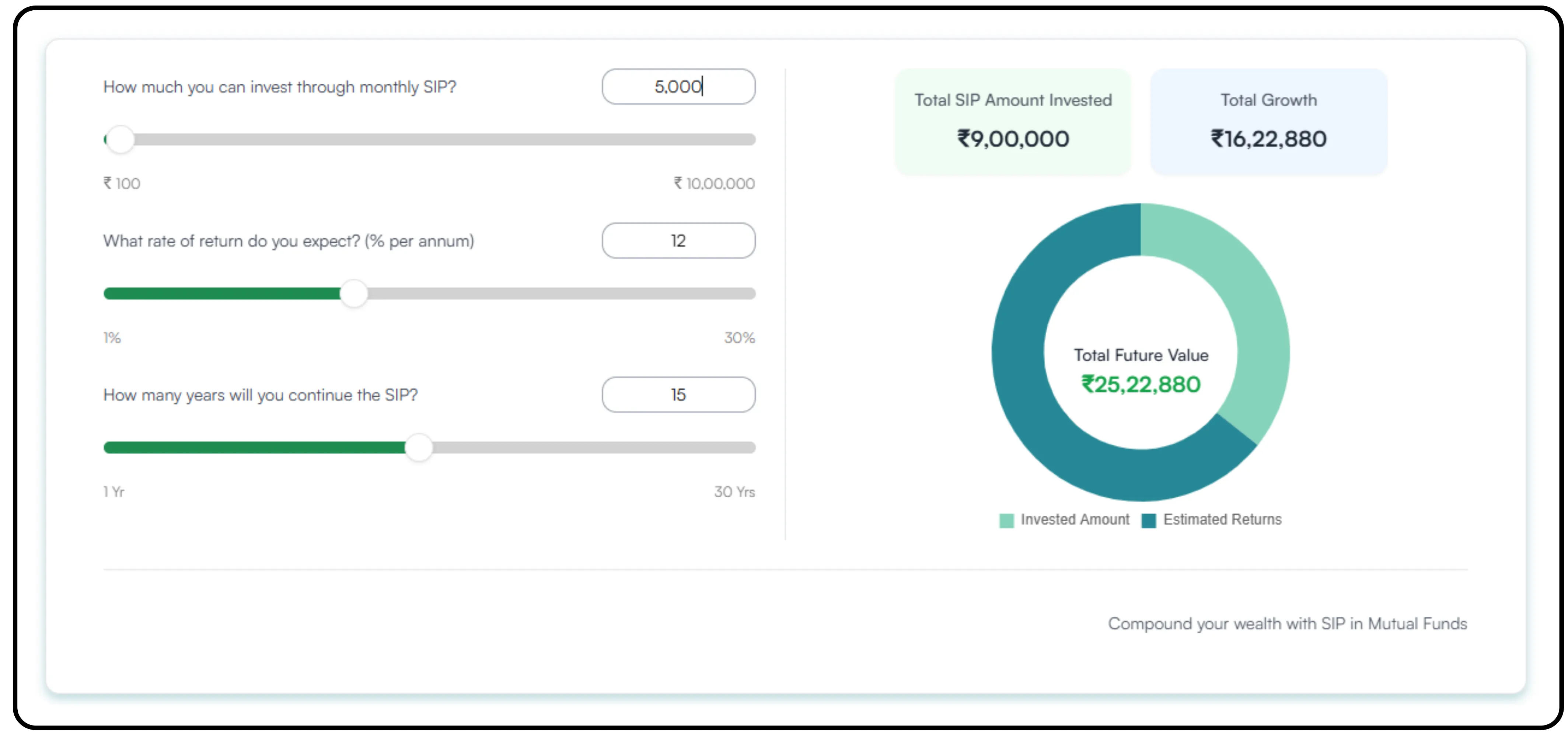
You can use a SIP calculator to estimate your potential returns and plan your SIP investments effectively.
How to be a consistent investor on CubePlus
Start Small, But Stay Regular
₹500 invested monthly beats waiting to invest ₹50,000 all at once. Investing in SIP, investing regularly, and disciplined investing are key to achieving long-term financial goals. SIP investments help mitigate market fluctuations, market volatility, and market risks.
Smart SIP Investment checklist
| Checklist | Explanation |
|---|---|
| Diversify Wisely | Balance equity with debt or liquid funds. SIPs in mutual funds help build wealth systematically. |
| Look at the Expense Ratio | A lower expense ratio ensures more of your money is invested towards actual growth. |
| Don’t Try to Time the Market | Staying invested through market ups and downs is more rewarding than trying to predict movements. |
| Link Goals to Investments | Align SIPs with goals like retirement, home, or education. Start early to benefit from compounding. |
How Mutual Fund payments work
When you invest in a mutual fund, either via SIP or lump sum, you are pooling your money with thousands of other investors in a professionally managed scheme.Here’s what happens behind the scenes:
Pooling of funds
You buy mutual fund units based on the fund’s current Net Asset Value (NAV). For example, investing ₹1,000 in a fund with ₹10 NAV gives you 100 units.
Fund allocation
A fund manager uses this pooled capital to invest in a basket of securities—stocks, bonds, or both based on the scheme’s strategy.
Ongoing management
The AMC (Asset Management Company) manages your money and charges a small fee (called the Expense Ratio) for it. They also publish regular fact sheets and performance reports.
Redemption & exit
When you choose to withdraw, you sell the units back to the AMC at the prevailing NAV. Some funds may charge an exit load if redeemed too early.
Example: How NAV and returns work
Let’s say you invest ₹1,000 in a mutual fund where the NAV (Net Asset Value) is ₹20. You’ll receive:
₹1,000 ÷ ₹20 = 50 units
Now, if over time the NAV increases to ₹28, the value of your investment becomes:
50 units × ₹28 = ₹1,400
That’s a ₹400 capital gain, the extra value earned as the fund’s underlying investments appreciate.
Also read: Investing in Precious Metals Through ETFs in India
Mutual Fund structure in India
India’s mutual fund ecosystem operates under a regulated three-tier structure overseen by SEBI. Each layer ensures that your money is managed transparently and professionally, under strict regulatory oversight.
Additional insights for Mutual Fund SIP investors
The power of compounding
One of the biggest advantages of SIP mutual funds is the power of compounding. It means you earn returns not just on your original investment but also on the returns themselves. Over time, this snowball effect significantly boosts your portfolio value, especially when combined with regular SIP contributions.
Rupee Cost Averaging
Rupee cost averaging is a core benefit of SIP investments. When markets are down, your fixed SIP amount buys more units; when markets rise, it buys fewer. This smoothens out the purchase cost and helps avoid the risks of market timing. Over the long run, your average cost per unit reduces, helping maximize returns.
Understanding risk appetite & investment objectives
Before you invest in SIP, assess your risk appetite. A younger investor with a longer horizon may prefer equity funds, while someone nearing retirement may choose debt funds. Align your investment goals, whether it’s saving under the Income Tax Act via Equity Linked Savings Scheme (ELSS) or building a retirement corpus through balanced funds.
Use a SIP calculator to plan your investments
A SIP calculator helps you estimate the maturity value of your monthly SIP investment. Just enter your monthly SIP amount, tenure, and expected rate of return. This tool simplifies your planning and shows how small, regular investments can help achieve large financial goals.
Types of SIPs: Tailored for You
CubePlus supports various types of SIPs to suit your evolving financial needs:
Step Up SIP: Gradually increase your SIP amount annually.
Top Up SIP: Boost your SIP when you get a raise.
Flexible SIP: Adjust the SIP amount based on your monthly cash flow.
Perpetual SIP: No end date, ideal for long-term goals.
Trigger SIP: Based on pre-set NAV or index levels (for advanced users).
Mutual Funds and Tax Benefits
Many mutual fund schemes, like ELSS, offer tax benefits under Section 80C of the Income Tax Act. You can claim deductions up to ₹1.5 lakh annually. These funds also come with a 3-year lock-in, encouraging long-term investing and wealth creation.
Read the scheme-related documents carefully
Before investing in any mutual fund scheme, make sure to read the scheme-related documents carefully. They provide insights into the fund's objective, asset allocation, past performance, and risk factors. A financial advisor can help decode these for first-time investors.
Start investing today with CubePlus
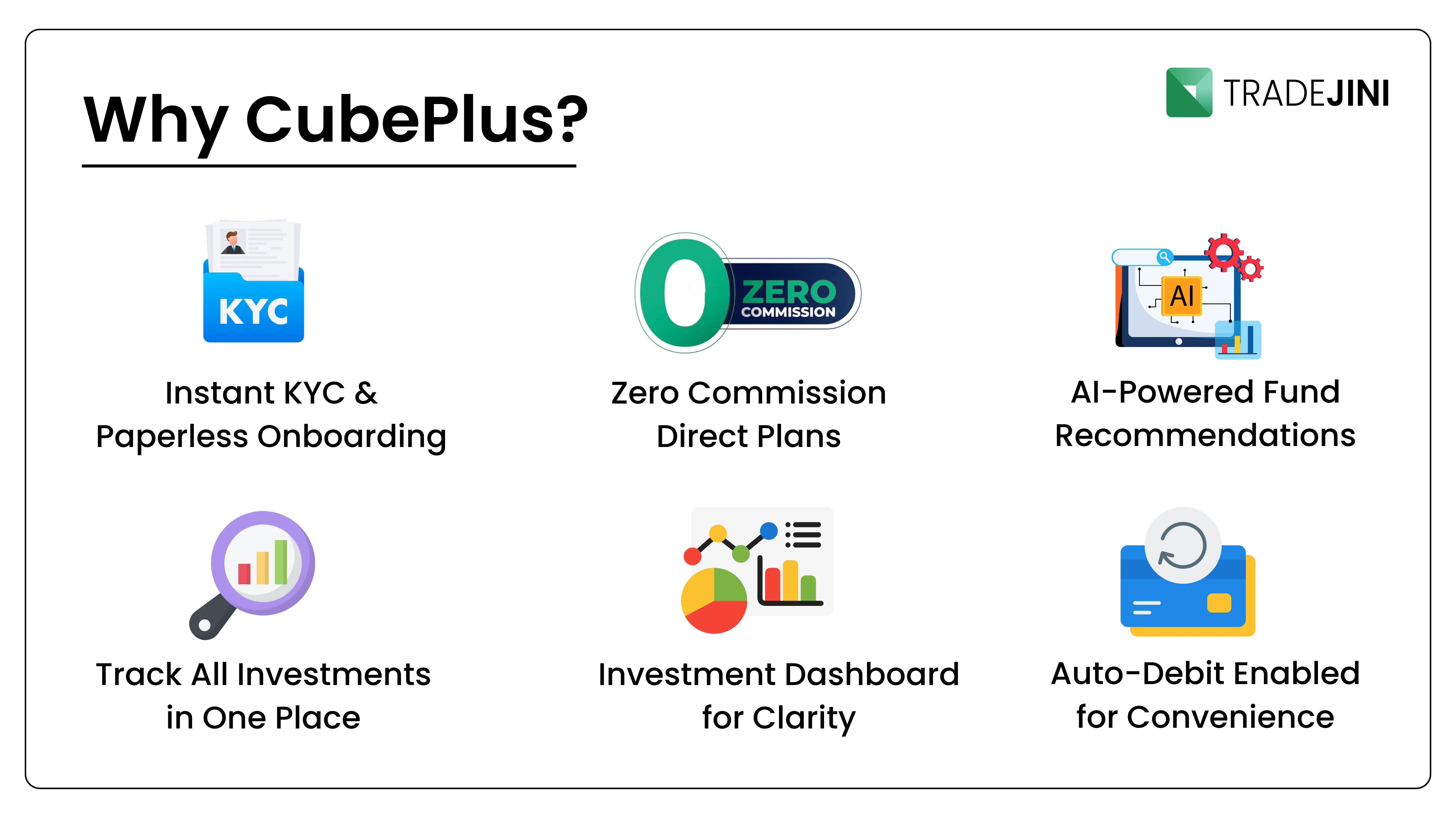
Whether you're a first-time investor or a seasoned market participant, CubePlus makes it easy to start SIP online. With a user-friendly interface, intelligent fund discovery, real-time tracking, and expert recommendations, it’s the ideal platform to start investing and build your investment portfolio.
Still unsure where to start? Just log in to CubePlus, explore mutual funds, and take that first step.
Investing regularly might not feel exciting at first, but your future self will thank you.
Also read: SIP vs Lumpsum: Which One is Better in 2025?
In closing
Starting a SIP today doesn’t require financial expertise, just consistency and intent. CubePlus makes it easy to begin and stick with it. Over time, you’ll not only see your money grow but also build the right habits for long-term wealth creation.
Disclaimer: The information provided in our blogs is for informational purposes only and should not be construed as financial, investment, or trading advice. Trading and investing in the securities market carries risk. Always conduct your own research and consult with a qualified financial advisor before making any investment decisions. Past performance is not indicative of future results. Copyrighted and original content for your trading and investing needs.
©️ 2025 — Tradejini. All Rights Reserved.