

Need more margin for F&O trades but don’t want to touch your investments? Pledging mutual funds lets you unlock liquidity without selling your holdings, so you can trade confidently while your long-term goals stay on track.
What is the mutual fund pledge for F&O?
Pledging mutual funds means offering your mutual fund units as collateral in exchange for trading margin. You don’t sell them; instead, you pledge them to your broker for margin. The broker provides you with margin based on the net asset value (NAV) of your pledged units after applicable haircuts. This avoids liquidating investments, so you retain ownership and potential growth.
It’s ideal for F&O traders who want liquidity while continuing to stay invested in the same mutual fund schemes they believe in.
Why should F&O traders care?
Liquidity Without Selling: Traders can access capital without breaking long-term mutual fund investments. This keeps your investment value growing, whether you are in equity funds, debt funds, or hybrid funds.
Returns Keep Coming: Even while pledged, direct mutual fund plans and regular funds continue to earn based on NAV. So you benefit from market upswings and dividends, just like other mutual fund investors.
Boosted Margin Power: Pledging allows you to take bigger positions in F&O markets using the margin generated from mutual fund holdings. This is especially useful when you are actively trading but don’t want to compromise your core investments. Additionally, pledged liquid mutual funds can be used to meet the cash margins required for F&O trading.
Which mutual funds are eligible?
Not all mutual funds qualify for pledging. Eligibility depends on the approved security lists of exchanges and the policies of your financial institution or broker, and the mutual fund units must typically be held in demat form, with the investor being KYC compliant. Brokers accept liquid funds, debt funds, and selected equity mutual funds, which are forming part of a list announced monthly by exchanges. Direct and regular plans may both be eligible.
Eligible mutual funds often have a high net asset value and lower volatility, making them more attractive as collateral. Generally, you can expect to receive around a 60 to 80% margin on equity funds and up to 80 to 90% on debt funds. These margins may vary based on the risk profile of the fund and the exchange’s haircut policies.
To ensure the mutual fund units you wish to pledge are accepted, it is important to check the approved list provided by your broker or exchange.
Pledging mutual fund units from eligible schemes can be a smart way to meet margin needs while keeping your investment portfolio intact. Always verify the approved list and eligibility criteria before initiating a pledge request.
How to pledge mutual funds?
The investment process is fairly simple:
First, ensure your mutual funds are held in Demat form.
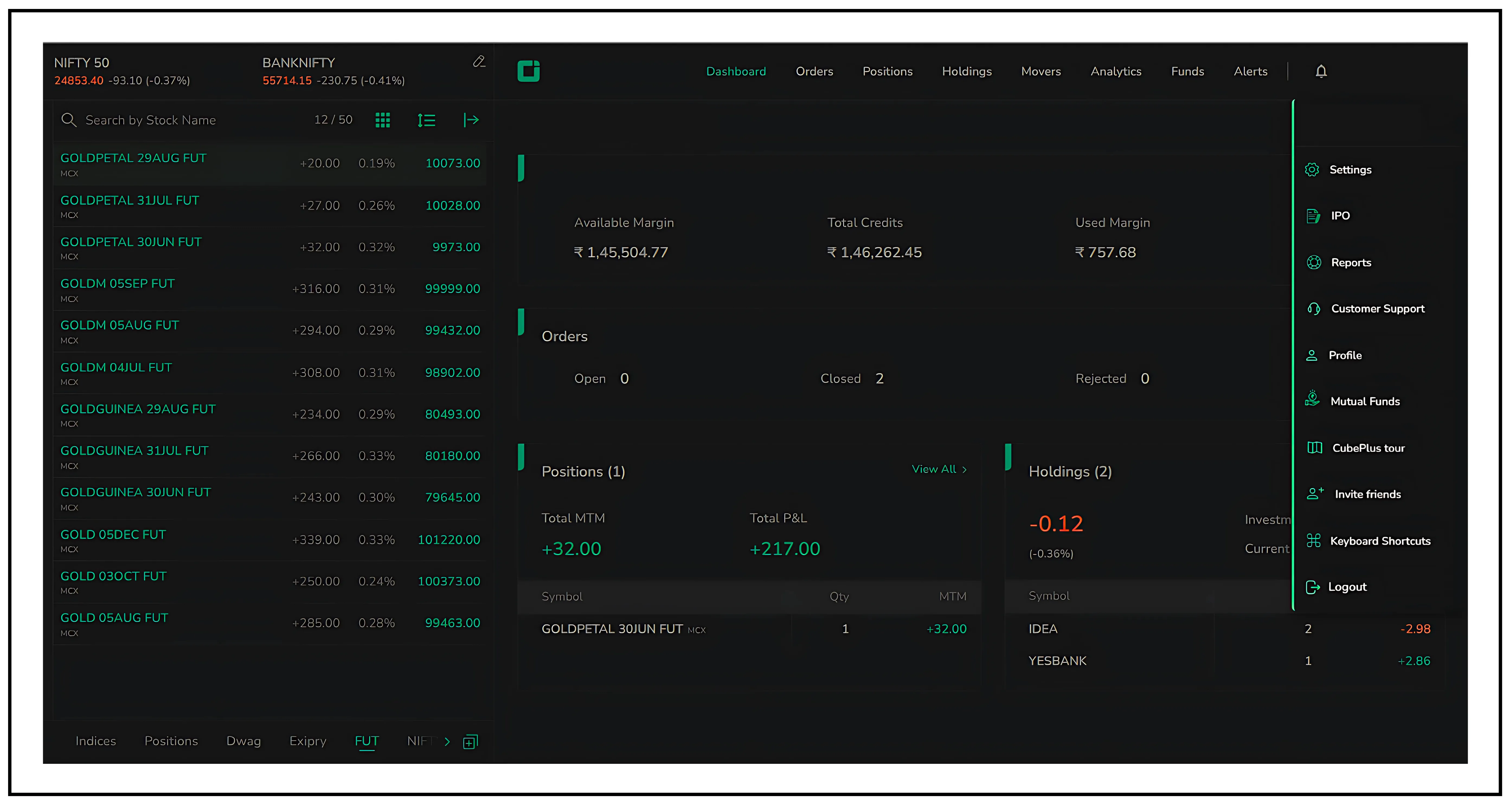
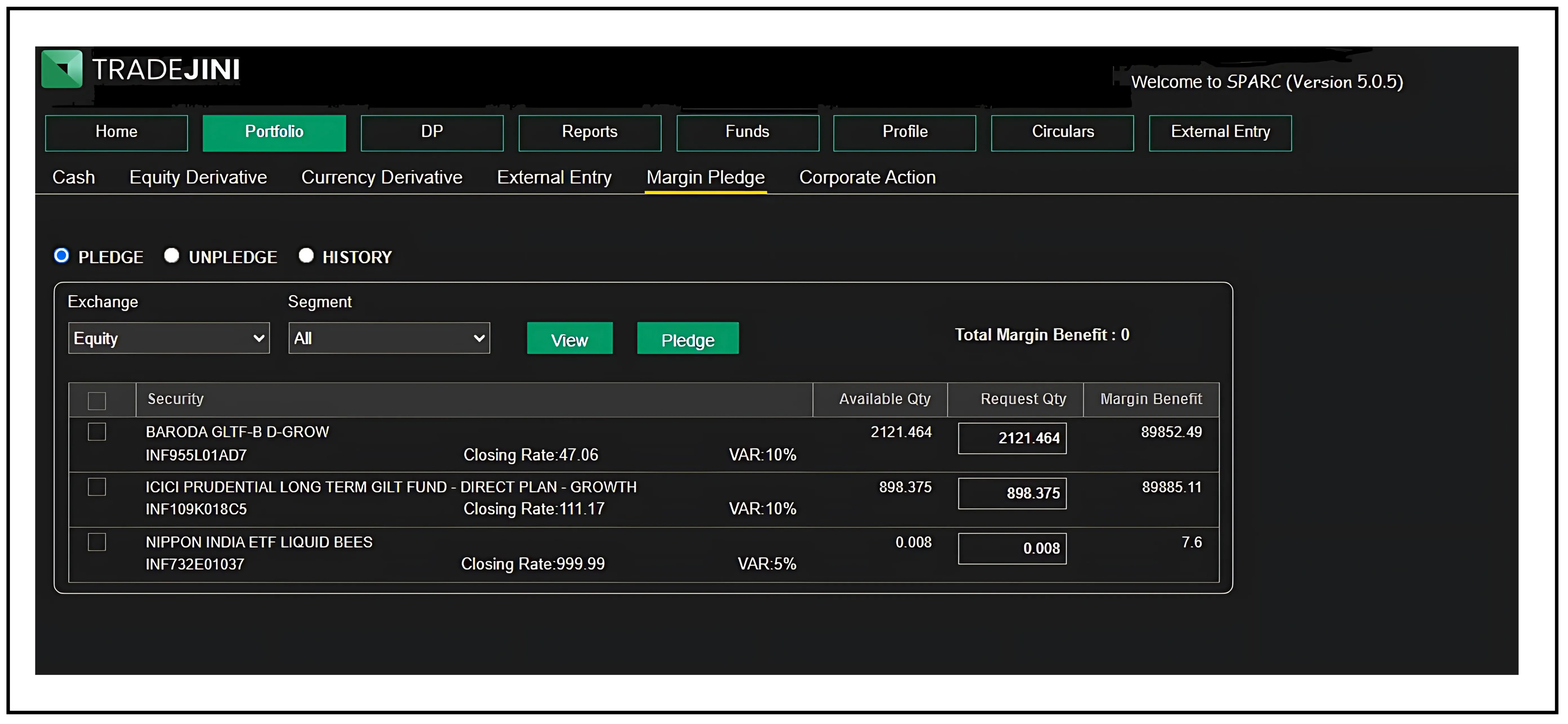
Log in to the CubePlus portal and select the Report section—click on Portfolio, Margin Pledge, and View.
Choose eligible mutual fund schemes, specify the quantity and click on pledge.
Authorize the pledge via CDSL OTP.
Margin is typically credited the next trading day.
Understanding collateral mechanics
When pledging mutual funds, your mutual fund units act as collateral, allowing you to receive collateral margins for trading, especially in the F&O segment and equity intraday trading. The collateral margin you receive typically ranges from 60% to 90% of the mutual fund’s net asset value, depending on the fund type and the broker’s policies.
Once you pledge your mutual fund units, they are lien-marked, which means you retain ownership and continue to earn returns such as dividends and interest. This structure allows you to meet margin needs while keeping your investment objective and portfolio growth on track.
Understanding the costs and haircuts
Brokers apply a haircut as mandated by the exchange, or more, for example, 20% on the NAV to account for price fluctuations. So, if your mutual fund NAV is ₹100, you may receive a margin worth ₹80.
How is the margin calculated on pledged mutual funds?
Let us say you hold 500 units of a mutual fund whose
NAV is ₹100.
Total value of your mutual fund holdings = 500 units × ₹100 = ₹50,000
If your broker applies a 20% haircut, then you will receive a margin of:
₹50,000 × (100% − 20%) = ₹50,000 × 0.80 = ₹40,000
So, after pledging your mutual fund units, you will receive a margin of ₹40,000 that you can use for trading without having to sell or redeem your investments.
Pledge Charges
Tradejini charges ₹32 per ISIN to process a pledge request. Charges may vary depending on the broker.
Interest and Margin Shortfall
If your account falls short of the required cash margin, interest may apply. The interest rate applied to cash or cash equivalent margin shortfalls can vary depending on the broker. This can affect your trading performance, so monitor regularly.
Things to watch out for
Cash Margin Rules: As per the Exchanges, it is mandatory to have at least 50% of the total margin required in the form of cash or cash equivalent. Not meeting that could lead to interest penalties.
Margin Calls: If the NAV drops, you may be asked to pledge more units or face forced liquidation. Market fluctuations can reduce the value of the mutual fund pledged, potentially leading to additional margin requirements.
The potential impact of significant market declines includes forced sale of pledged units or margin calls, which can negatively affect your investment and credit score.
Unpledging is usually just a simple click.
Who should use this strategy?
Active F&O and equity intraday traders looking for smart capital use without breaking long-term mutual fund schemes.
Investors want to keep their investment objectives intact while still participating in high-leverage opportunities.
Anyone already invested in actively managed funds, index funds, direct funds, equities, or stocks who wants to boost margin without altering asset allocation or selling their holdings.
Investors should note that eligibility and terms depend on the brokers’ policies, which may vary between different financial institutions.
Making smart investment decisions
Understanding mutual fund expense ratio dynamics, whether in direct funds or regular mutual fund investors, is key to making smart calls. A good expense ratio can improve your returns significantly over the long term, especially when your funds are also being used as collateral for trading. So it is always a smarter decision to hold your mutual fund in demat form.
Also, consider how the overall expense ratio, operational costs, and fees affect your net returns. Even though SEBI has set limits on the total expense ratio, differences between fund types and categories still matter. Always check the expense ratio before making investment decisions. By buying mutual funds through CubePlus, you can avoid paying a higher expense ratio and also take advantage of pledging mutual funds for F&O trading.
Use your mutual funds like a pro while keeping returns intact
Pledging mutual funds bridges the gap between trading flexibility and wealth-building discipline. Whether you are in direct or regular mutual fund plans, understanding how expense ratios work, keeping tabs on costs incurred, and aligning with your financial interests is key.
So, the next time you are tight on margin but rich in mutual funds, remember: you can have your cake and eat it too; trade smarter while your money continues to grow.
Disclaimer: The information provided in our blogs is for informational purposes only and should not be construed as financial, investment, or trading advice. Trading and investing in the securities market carries risk. Always conduct your own research and consult with a qualified financial advisor before making any investment decisions. Past performance is not indicative of future results. Copyrighted and original content for your trading and investing needs.
©️ 2025 — Tradejini. All Rights Reserved.