

A stop-loss guarantees a trigger. It doesn't guarantee a price. When a stock gaps at the open, that difference can turn a clean 5% stop into a 15% loss. The order book at 9:15 isn't the one you're used to. On illiquid stocks, it's thin enough to fill your exit several price levels away from where you set it. This article breaks down why that happens, and what it means for how you size a trade.
What a Stop-Loss Actually Promises
You buy a stock at ₹500. You set a stop-loss at ₹475. A clean 5% risk, on paper.
That night, the company misses its earnings estimate. Sentiment turns negative before the market even opens.
At 9:15, the stock opens at ₹430. Not a slide down to ₹475 and through it. A jump, straight past your stop and several price levels below it.
Your stop-loss triggers, exactly as designed, exactly on time. But there's no buyer waiting at ₹475. It fills at the next available price: ₹428.
You planned for a 5% loss. You took a 14% loss.
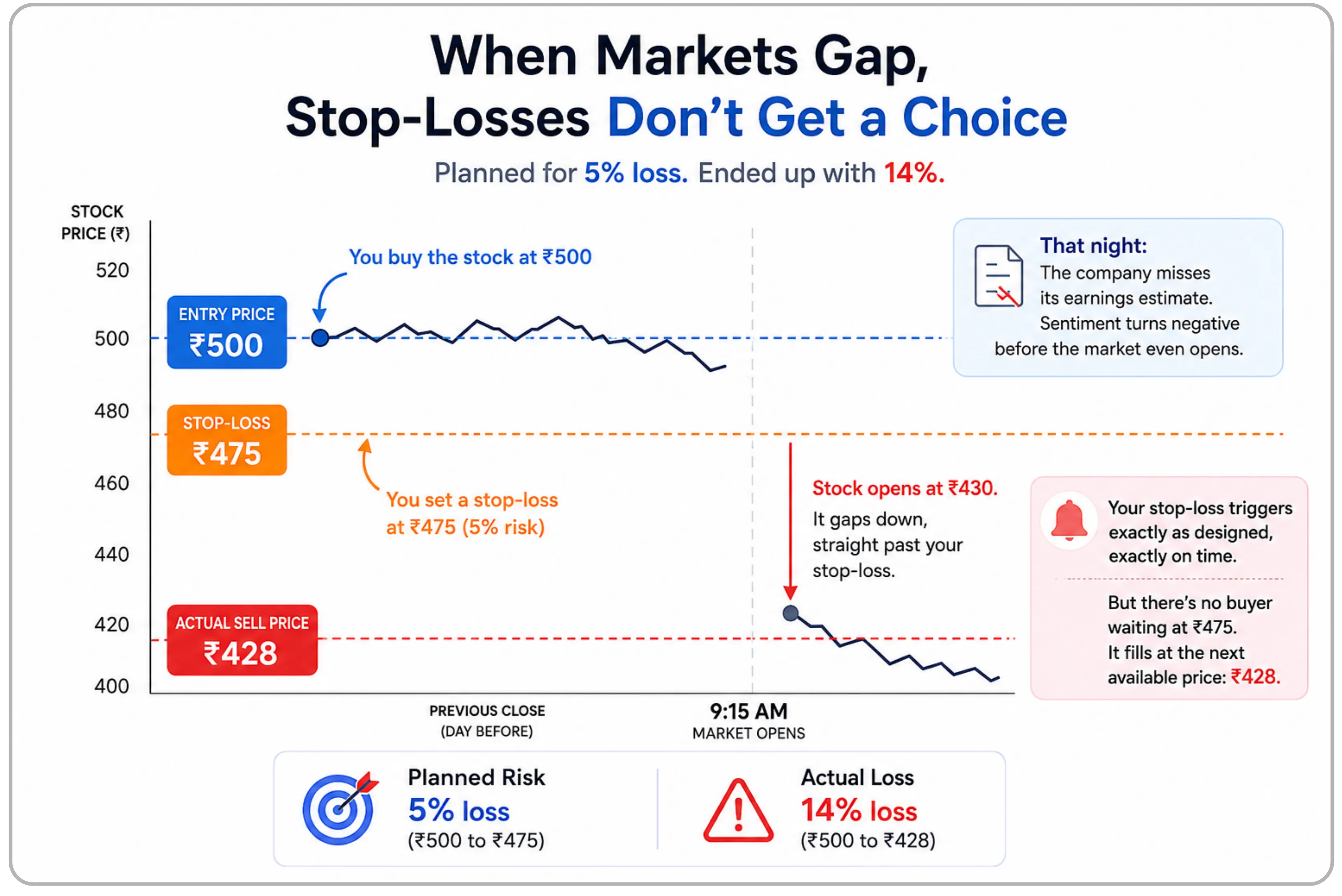
Nothing malfunctioned. The order fired correctly, the broker's system worked, and you still lost nearly three times what you'd budgeted for.
Here's the part most explanations skip. A stop-loss guarantees a trigger. It does not guarantee a price. Those are two different promises, and the gap between them is where retail traders keep getting hurt, especially in stocks that don't trade in high volumes.
The rest of this piece is about that gap. Why it opens up in the first fifteen minutes of trading. Why the same stop-loss behaves differently on a liquid stock than on a thinly traded one. And what it means for how you size a position and place a stop, GTT included.
What a Gap Actually Is
A gap is simple to define and easy to misunderstand. It's the difference between where a stock closed yesterday and where it opens today, with no trading in between. Not a steep fall. An absence of any trade at all in that range.
Normal price movement is a walk. One trade nudges the price up or down a tick, then the next trade nudges it again. A stop-loss sits somewhere on that path, waiting for price to arrive at it. A gap is not a walk. It's a jump. Price simply appears somewhere else when the market opens, and every level your stop might have crossed on the way down was never actually traded.
Gaps come from information that arrives while the market is shut. Quarterly results announced after 3:30 PM. A regulatory order. A credit rating downgrade. A resignation. Global cues matter too: how US markets closed overnight, a move in crude oil or the rupee, weakness across Asian markets before the Indian open.
Exchanges try to manage this with a pre-open session, from 9:00 to 9:15 AM. For the first several minutes you can place, modify, or cancel orders, but nothing executes. The system then matches all the collected orders at a single price, the one where the maximum quantity can trade, and that becomes the opening price. It's a genuine attempt to find a fair price before regular trading starts.
But a call auction can only work with the orders it receives. If the news is bad enough, the auction itself discovers a price nowhere near yesterday's close. The gap isn't a glitch in the mechanism. It's the mechanism doing exactly what it's built to do, using information that only exists after the previous session ended.
Why the Order Book Thins Out Right After the Bell
The gap explains why price jumps. It doesn't explain why the fill is so bad. For that, you need to look at what's actually sitting in the order book once regular trading starts.
Depth is not just the best price on offer to buy or sell. It's how much quantity is resting at each price level behind that. A stock can show a tight spread and still have almost nothing behind it. That gap between spread and depth is where slippage lives.
At 9:15, depth is thin. Not because interest in the stock is missing, but because most of it hasn't arrived yet.
The pre-open auction has already absorbed some of the natural buying and selling that would otherwise show up in the first few minutes. Market makers, who normally keep both sides of the book populated, don't yet know how volatile the session will be, so they quote wider and commit less size until the first few minutes settle. Large institutional orders are usually worked through algorithms built to spread execution across the day, and these deliberately avoid dumping size into the opening minutes, when prices are least stable. Retail orders, the ones that do arrive at the open, trickle in through the morning rather than showing up all at once.
The result is a book that can absorb very little without moving. A sell order that would barely register at noon, because enough resting demand exists to soak it up, can push through three or four price levels at 9:16, because that demand simply isn't there yet.
This isn't permanent. Depth usually builds back within the first fifteen to twenty minutes, as more participants log in and market makers grow comfortable with where the stock wants to trade. But if your stop-loss triggers in that window, and on a gap day it almost always does, you're not trading against the market as it normally behaves. You're trading against the market at its thinnest point of the entire day.
Same Gap, Different Stock, Wildly Different Outcome
Everything so far applies to every stock equally. The size of the damage does not.
Split stocks into three rough liquidity tiers, and the same gap-down news produces very different outcomes depending on which tier you're in.
At one end sit the large, heavily traded names, typically index constituents, where multiple market makers and a broad base of active traders keep the book reasonably deep even in the first minute. A gap still hurts here, but the fill usually lands close to where the stop was meant to trigger.
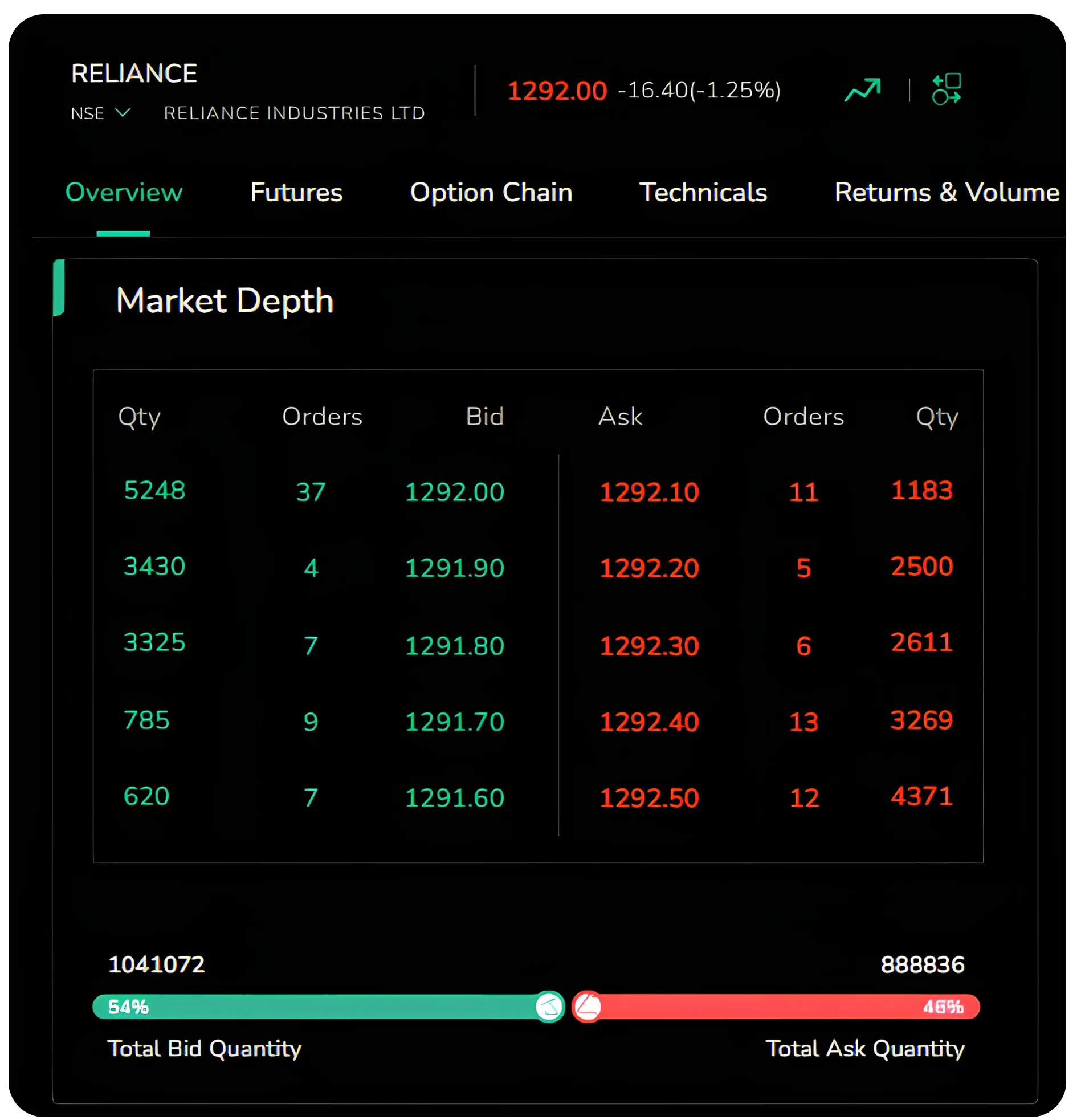
In the middle sit liquid midcaps. Spreads are wider, and depth takes a few minutes to build. Slippage is real, and it gets noticeably worse around a results announcement, when everyone with a stake in the stock tries to react at once.
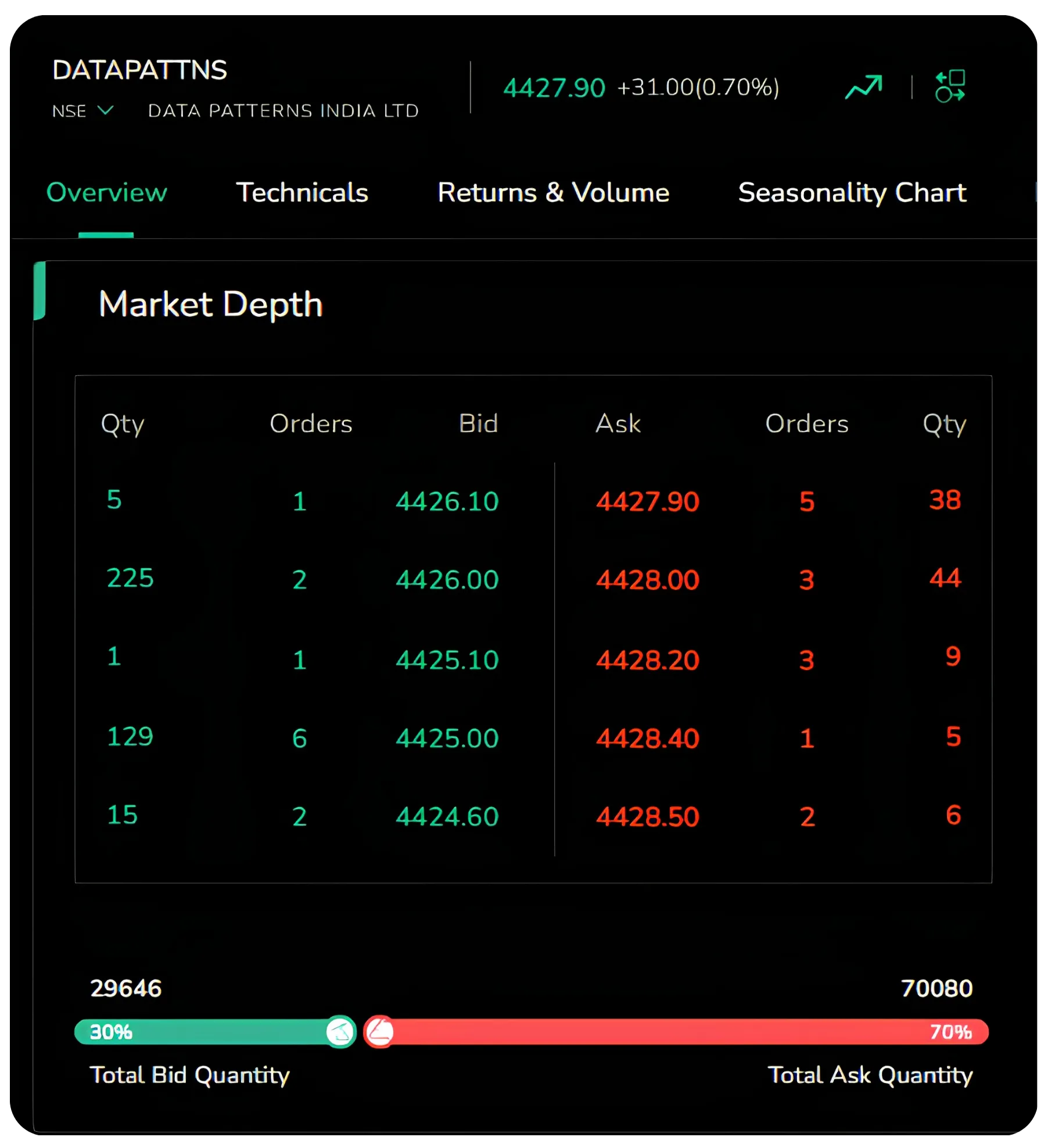
At the far end sit the illiquid smallcaps and low-float names, the ones where a single large trader can move the price on their own. The book here can be wafer thin or even one-sided at the open. A gap-down stop-loss in this tier can suffer heavy slippage, or fail to execute at all if the stock locks into its circuit band before your order finds a buyer.
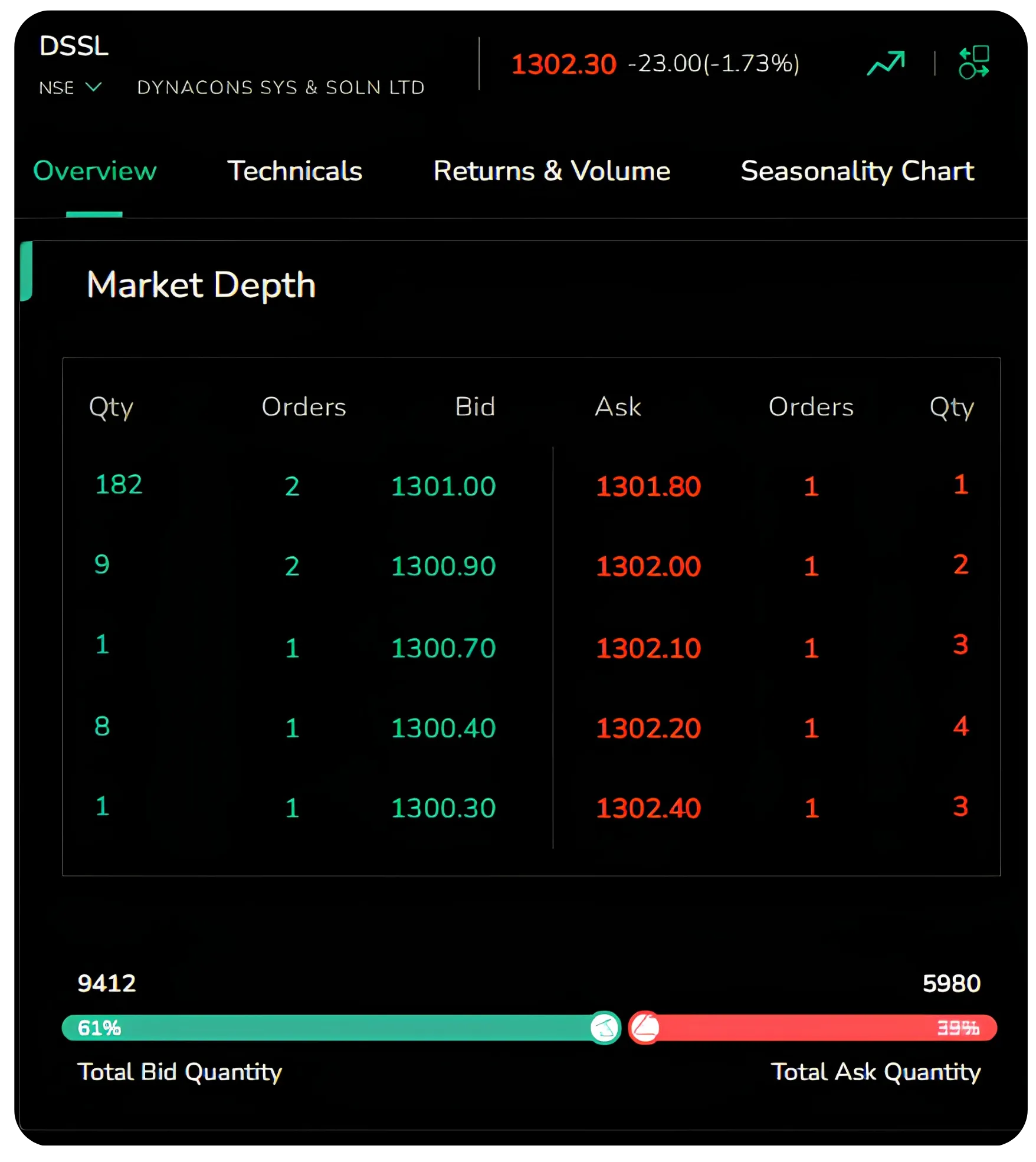
Here's how that plays out on a straightforward example: a stop-loss set at 5% below the entry price, on a day the stock gaps down on bad news.
| Liquidity tier | Typical example | Spread at 9:15 | Depth at 9:15 | Fill on a 5% stop, gap-down day |
|---|---|---|---|---|
| Tier 1 | Large, heavily traded index stocks | Tight | Deep, even in the first minute | Close to the trigger price |
| Tier 2 | Liquid midcaps | Moderate | Thin, builds up over a few minutes | Noticeable slippage, worse on results day |
| Tier 3 | Illiquid smallcaps, low-float stocks | Wide | Very thin, sometimes one-sided | Heavy slippage, or no fill if the circuit locks |
The mechanism behind the gap, thin depth, and a stop that only guarantees a trigger, is identical across all three rows. What changes is how expensive that mechanism turns out to be. That's the part a lot of position sizing gets wrong: treating a 5% stop on a Tier 1 stock as the same risk as a 5% stop on a Tier 3 stock, when the two can produce entirely different mornings.
Also Read: 7 Ways to Value a Stock and What Each One Actually Tells You
SL-M, SL-L, and the Circuit Filter Dead End
The tier a stock sits in decides how bad the damage gets. The order type you chose decides how that damage actually shows up on your screen.
A stop-loss order isn't one thing. It's a trigger attached to one of two different order types, and the choice between them decides how the gap problem plays out.
An SL-M order, a stop-loss market order, is simple. Once the trigger price is hit, it becomes a plain market order: sell at whatever price is available right now, no matter how far that is from where you intended. This guarantees the exit. It does not guarantee the price.
An SL-L order, a stop-loss limit order, adds a floor. Once triggered, it becomes a limit order at a price you set. It won't sell below that level. This protects the price. But it can leave you holding the stock with no exit at all, if the gap jumps straight past your limit and nothing trades there.
Neither version escapes what a thin order book does to a large order. Picture a real book at 9:16: fifty shares resting at ₹428, another hundred at ₹425, two hundred at ₹420. An SL-M order for five hundred shares doesn't get one price. It fills across all three levels and whatever comes after, and the average received gets dragged down by every level it passes through on the way. This is usually described as the order walking the book, and it's exactly what turned a planned ₹475 exit into an actual ₹428 exit in the earlier example.
Then there's the circuit filter, the daily price band an exchange places on a stock, typically somewhere between 2% and 20% depending on how the stock is categorised, with wider bands for more volatile, less liquid names. If a stock gaps down far enough to hit its lower circuit, it can lock there with no seller found at any price inside the band. At that point, an SL-M and an SL-L fail in exactly the same way. Neither can execute, because there's genuinely no buyer on the other side, not until one eventually shows up, which may not happen until a later session. This is the cleanest version of a stop-loss that technically worked and practically did nothing. Circuit bands differ by stock and get revised by the exchange from time to time, so it's worth checking the current band on a specific stock rather than assuming.
The GTT Myth: Automation Isn't Protection
None of this changes if you automate the stop-loss instead of placing it by hand.
GTT stands for Good Till Triggered. It lets you set a trigger price once, along with the order you want placed when that price is hit, and it stays active for up to a year instead of expiring at the end of the trading day like a normal order. You don't need to re-place your stop-loss every single morning. That's the entire point of the feature, and it's a genuinely useful one.
Here's what it doesn't do. The moment your GTT trigger is hit, it's converted into a regular order, usually a limit order, and sent to the exchange. From that point on, it faces exactly the same book as anyone else's order placed manually at that second. The same thin depth. The same gap. The same circuit filter, if the stock has locked.
A GTT set to sell at ₹475 behaves no differently on a gap morning than a manually placed SL-L at ₹475. If the stock opens at ₹430, the trigger fires, the limit order goes out at ₹475, and it simply sits unfilled, because nothing is trading anywhere near that price. On an illiquid stock, there's no guarantee of a fill even after the trigger activates.
"I've set a GTT, so I'm covered" is a common shorthand, and it's only half true. GTT solves the problem of forgetting to place your stop-loss. It does nothing about the problem of a market that gaps past it. Those are two separate problems, and only one of them gets automated away.
Sizing a Position for a Market That Can Jump
All of this eventually comes back to one decision made before any of it happens: how much to put into the trade in the first place.
Most position sizing starts and ends with one number, the percentage distance between entry and stop-loss. That number works fine when price moves the way a stop-loss assumes it will, in small steps, one trade at a time. It works less well the moment a gap is possible, because the real risk on a gap day isn't the distance to your stop. It's that distance plus however far the price jumps past it.
For a Tier 1 stock, the gap between planned risk and actual risk is usually small enough to ignore. For a Tier 3 stock, it can be the difference between a manageable loss and one that wipes out several trades' worth of gains in a single morning.
A few adjustments follow from this directly. Position size on an illiquid name should be smaller than the same percentage stop distance would suggest on a liquid one, because the realised loss on a bad gap can run to multiples of the intended risk, not a small overshoot. Holding an illiquid stock overnight into a known catalyst, quarterly results being the clearest example, deserves a second look, since a stop-loss offers no protection while the market is shut and the news is doing its damage. And liquidity tier itself deserves a place in the sizing decision, not just volatility or stop distance. A 5% stop on a Tier 1 stock and a 5% stop on a Tier 3 stock are not the same trade, even though the number looks identical on the order screen.
None of this removes gap risk entirely. Some traders manage it further with options, or by trimming overnight exposure into events they know are coming, since a stop-loss on the underlying stock can only do so much. That's a large enough topic to deserve its own piece rather than a paragraph here.
The Checklist, and the One Line Worth Remembering
Before placing a stop-loss on a stock you haven't traded before, a few checks take less time than the trade itself.
Look at the average daily volume, since that's the fastest read on which liquidity tier you're actually in. Find out where the circuit band sits for that specific stock, rather than assuming a general rule of thumb, because bands differ and get revised. Choose between SL-M and SL-L deliberately: pick SL-M when getting out matters more than the price you get out at, and SL-L when the price matters more than a guaranteed exit, but never default to one without asking which trade-off you're making. Size the position for what the stop-loss could actually cost on a bad gap, not just what it's supposed to cost on paper. And treat a GTT order for what it is, a convenience that removes the need to remember, not a safeguard against a thin market.
None of this stops a stock from gapping. It just makes sure you're not surprised by what your own stop-loss was always capable of doing.
A stop-loss is a promise to sell. It was never a promise about the price.
Disclaimer: The information provided in our blogs is for informational purposes only and should not be construed as financial, investment, or trading advice. Trading and investing in the securities market carries risk. Always conduct your own research and consult with a qualified financial advisor before making any investment decisions. Past performance is not indicative of future results. Copyrighted and original content for your trading and investing needs.
© 2026 — Tradejini. All Rights Reserved.
.webp%3Falt%3Dmedia%26token%3D0ead9799-20bc-4d1e-ae8f-d75ab18921b5&w=3840&q=75)